Friday, 17 August 2012

'Life may be not only meaningless but absurd.'

I spent the last week away in the countryside with my family, which is something we do every year. I am not very sure that I like the countryside anymore. The scenery is different from what I - a lifelong suburbanite - am used to; it makes me feel, as a human being, smaller and more insignificant, because the marks of human life are few, feeble and distant from each other. Of course I am conscious of our tininess in space and time - our size is an issue of scale, and compared to the Universe we are invisible specks, while compared to atoms we are unimaginable universes in ourselves -, but being confronted with it is always a shock. 
We forget our proportion. We pretend we are immortal. We cannot face a world without our selves in it, for obvious reasons: the self is our perspective into the world. Non-existence - the empty void, unfathomable by nature - scares us, so we pretend.
In fact, we must delude our selves to create a meaning for our lives, and we do so everyday. But there is no greater meaning: our lives are self-contained. In acquiring knowledge, we can never jump out of our own heads; similarly, our personal identity is circumscribed to a specific area of space and time, and it cannot transcend it. 

The impact of our action is exterior to our selves, so the idea of achieving immortality by leaving things behind - children, books, structures, progress for humanity - is just another delusion. Furthermore, it is an unsatisfactory one: not only does it exclude perception and action and all the things which make living worthwhile (as Woody Allen famously put it, 'I don't want to achieve immortality though my work... I want to achieve it through not dying.'), but also leads to the question 'What is the point of that (our impact in the future of other people), then?' in an infinite regress.

Religious people answer with God. God is, by definition, the final answer: subject and object united, containing its own purpose and end in itself. I am not going to argue against the traditional arguments for the existence of God (if you want a very strong and clear refutation of the most important ones, you'll find it in Simon Blackburn's Think), so I will just point out two ideas. 

First, this 'rational' conception of God is equivalent to choosing an arbitrary point to pause the regress - why there, then? Why not stop before employing that obscure notion of a divine presence, which is unnecessary to explain the Universe? 

Secondly, this idea of God is very hazy, so much that it is generally interpreted by believers as a matter of emotion. Its features are blank, for it is just a dummy which each culture colours according to its body if beliefs, rules and habits (as can be seen from the multiplicity of religions that exist). And who can claim to truly understand or perceive the 'rational' conception of God? A nothing would do just as well as a something about which nothing can be said.

Quoting Thomas Nagel in What Does It All Mean?:
"But what's the point of being alive at all?"
"There's no point. It wouldn't matter if I didn't exist at all, or if I didn't care about anything. But I do. That's all there is to it." 
If life is not real, life is not earnest, and the grave is its goal, perhaps it's ridiculous to take ourselves so seriously. On the other hand, if we can't help taking ourselves so seriously, perhaps we just have to put up with being ridiculous. Life may be not only meaningless but absurd.
 This is, by the way, one of my favourite quotations. In the end, it doesn't matter that life doesn't matter. It doesn't make any difference to what we can do. So as not to fall prey to manipulation, it is good to remember that life is both meaningless and absurd; however, the fact just does not stick to our minds because we are built to live and should, in my opinion, take the most out of it.

Sunday, 5 August 2012

The Olympics.

I have been savouring the Olympics, i.e., I have been obsessively watching athletes performing at insane levels of perfection in a variety of sports. I had never had the opportunity to do so before - both in 2004 and in 2008 I was on holidays and, as far as I remember, did not have easy access to TV/internet. The ones I have followed most closely are swimming, athletics, and gymnastics; also cycling, diving, and judo (for some reason, Portuguese TV showed ALL of the judo, and, though it's not one of my favourite sports, I am now an expert on its rules).

It all started with the dazzling opening ceremony, directed by Danny Boyle (in my opinion, one of the most distinctive, diverse and interesting contemporary film directors). It was boldly British, telling their history - from natural idyll to industrial power to cultural centre - in bold, joyful strokes, and including a wide variety of cultural motifs. This very spirited attempt to blueprint Britain resulted in grand entertainment with a heart and a message. The fast succession of beautiful settings and choreographies, the accessible humour, the ability to join multiculturalism and pride in a great historical inheritance made the opening ceremony exhilarating.

In particular, I loved the tribute to the National Health System - now that it is under violent attack, an eloquent reminder that it is possibly the best idea of the 20th century is well necessary - and to literature - much like sport, making us dream and think and go further. 

Later that same night, I loved seeing the smiling athletes from all over the world proudly carrying their flags. This moment of the ceremony, which could be seen as dull, points to the beauty of the Olympics, perhaps the one event in which we get to see the diversity of people in the world and the feelings of joy, pride and achievement that all of us feel. The happiness shared by all - they are, after all, in their prime, and they have achieved greatness just by being there - makes them look otherworldly beautiful.


What I most love about the Olympics is seeing talented, passionate and hard-working individuals attempting to outdo themselves and, in the process, inspiring countless others - all in a spirit of respectful, healthy competition. Though I root for some countries - Portugal, obviously, also GB, Spain, Brazil - what I really love is having the chance to see athletes do justice to their extraordinary abilities and dedication. 


I know, of course, that there are all sorts of cynical contradictions going on in the backstage of the Olympics, but right now I just want to enjoy the ride and be inspired by these amazing athletes. Being able to share this excitement with so many other people makes me feel connected - makes me feel more human. I hope that, one day, I will be able to channel my energy in such a directed way, and achieve a measure of their beauty.


Saturday, 4 August 2012

Luna, the doors are open You could not burn faster if you tired

Fanfarlo are brilliant - their album Reservoir is filled with joyful summery songs. Luna is probably my favourite:


Tuesday, 31 July 2012

Bluestockings: The Remarkable Story of the First Women to Fight for an Education by Jane Robinson


Bluestockings tells the story of the first women to go to University in the UK, of their fight for that right, of the prejudices they faced, of the friendship an support that allowed them to succeed, of how they lived, what they learnt, and what they came to contribute to society. It is easy for us to take education for granted (forgetting that, in so many places in the world, it is still denied to both women and men), which is why it is so important to remember, through books like this one, that we owe our freedom to the sacrifices of the ones who came before us.

The women of whom this book speaks are inspiring true heroines who were driven by love of knowledge in a hostile world where they were, due to gender, considered unable to learn - in fact, pretty much unable to do anything but have children and take care of the house. The arguments used against them are both laughable and outraging: women's brains are lighter than men's; studying would make them infertile or hysterical or promiscuous... they proved them wrong by their extraordinary results and, later on, by the high participation and success of women in most areas. 

However, this fight - which started in the 18th century but only gained momentum in the second half of the 19th century - was not a loud one. There were moments of resistance to these revolutionary women's ideas, most notably the 1897 riot of Cambridge students against the idea of awarding degrees to women (which, incredibly, Cambridge only did in 1948), but in general these women were quiet and very well-behaved. This strategy allowed them to prove that higher education for women has excellent results, thus silencing opposition and strengthening their cause. Soon enough, girls from all social classes were going to University, experiencing some measure of independence, expanding their minds, and forming strong friendships. The quaint, old-fashioned and rather sweet descriptions of their daily lives and the anecdotes related are great fun to read about.

Of course, not everything was perfect: there were women who did not adapt at all, others who faced conflicts with their families or economic hardship (and it is touching to read about how they helped each other), and all had a very restricted form of freedom. For example, if they wanted to go anywhere, they had to take a chaperon; for a man to go into a woman's bedroom, the bed had to be removed first and the door kept open (even if it was a family member). Initially, upon leaving University, they either married and had children or became teachers but, by 1939, women were starting to go into every career, inspired by the generations before them. Change is portrayed as a wave that keeps gaining momentum as it moves forward.

The evolution in the part women play in society has been extraordinary - which is why the book is written in the sunny tonality of winners - but we must not forget that there are still many challenges ahead in the struggle for an egalitarian society in which feminism plays an important role. This book does not cover those general changes: its scope is narrower, which allows the author to focus on individual lives, thus re-constructing in delightful detail the way of life of young 'undergraduettes' in British Universities during the late 19th/early 20th centuries (until 1939). The text is so fluid, the stories so touching and amusing, that the pages fly by; and the respect for education and for these extraordinary women is clear throughout.

Warm, funny, important - all in all, a delightful book!

Sunday, 29 July 2012

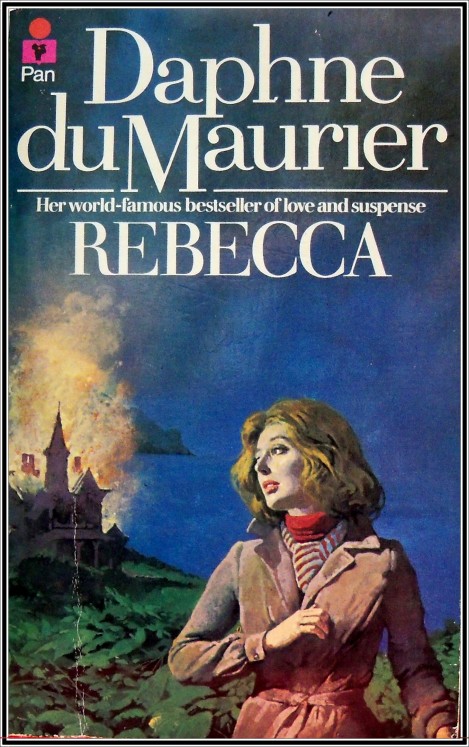
Rebecca by Daphne du Maurier


Rebecca tells the story of a naive young woman - who remains unnamed throughout the novel - who marries a much older man, Maxim de Winter. It is his second marriage: his first wife, Rebecca (the central, though ghostly, presence in the novel) died in mysterious circumstances the previous year. 

The couple meet at Monte Carlo, where she is working as a companion to an older, quite irritating older woman. She falls for him with the typical abandon of a teenage girl, and the descriptions of the joy-filled torment of knowing that the time spent with him will pass, and that it will all change, are one of the highlights of the book.

Surprisingly, he decides to marry her and, after going on a trip through Europe, they move to Manderley, the De Winter family mansion, where he used to live with Rebecca, whose haunting grip - haughty, mysterious, and unreachable - threatens to destroy any possibility of happiness. In particular, the house keeper Mrs Danvers acts as a memorable passive-aggressive threat due to her fixation on Rebecca and coldness of character; the house is also much more than a physical setting, taking on a variety of heavy symbolic meanings that permeate the characters' lives. Then, we discover a 'terrible secret' about Rebecca's death, and the book morphs into an Agatha Christie type of suspense/detective story, only from a skewed perspective.

It is a very good Summer read - suspenseful, gripping, written in a clear, elegant style, with a sympathetic narrator/leading character, and, perhaps most importantly, a very involving setting, both seductive and scary (a remarkable setting makes reading feel like travelling) - but that is not the only reason I recommend it. Most importantly, it is a sensitive exploration of a variety of important questions, most of them related to power imbalance in relationships and its consequences. The relationship between the de Winter couple is unbalanced in every way: he is much older, richer, more experienced, and from a higher social level than she is. In fact, she has nowhere to go, no life to return to and, due to the lack of perspectives women had, no opportunities to take up; furthermore, she is shy and lacks in self-confidence - you could cal her weak, though her clear wit would keep me from doing so. Thus, her life revolves around her husband, and she tries her best to fit herself into a mold she perceives his first wife to have set. That would be hard enough due to the hardness of learning to behave - and feel like - a member of a higher social class than the one you were educated into, but the presence of Rebecca, who appears to have been the epitome of perfection but of whom no one speaks with clarity, is an even bigger threat to her mental sanity and to any chance of happiness. And why? Simply because, due to the power imbalance between the couple, she is left in the dark through most of the novel, treated as a pet, that is, as someone unable of depth of intellect or emotion, pleasant enough but ultimately insignificant. 

Curiously, Maxim de Winter is not a repulsive character. The fact that he remains charming throughout the novel, the reader sharing his wife's desire to spend time with him an get to know his mysteries, is a proof of the author's skill in narrating. Her subtle - but constant, realistic and very textured - psychological portrait of the leading character, in my opinion, the best feature of this book. The use of symbolism, the descriptions of Manderley, the emotional reactions, all are great achievements. On the other hand, I found the plot slightly clumsy in its development and climax. 

It is interesting to trace Rebecca's literary ancestry. It is a Gothic novel, with a dark, sultry ambiance that reminds the reader of books such as Dracula. However, the most striking parallel is with Jane Eyre: saying it is a retelling is not much of a exaggeration. In both, the heroine from a lower social class falls for a richer, older man with a dark secret related to his first wife; in both, the revelation of this secret is essential to change the power imbalance of the relationship and to lead to a resolve; in both, fire plays a both destructive and restorative role. The main difference is the personality of the heroine: Jane is a far harder, more determined and stronger young woman, much more admirable but not as easy to relate to.

Monday, 23 July 2012

I'd like to give you just the right amount and get some change


This is one of my favourite 'romantic' poems, mostly because it isn't romantic in the common sense. Instead, it is saucy, combining naughtiness and sweetness in the form of detailed physical observations, teasing suggestions and hazy daydreams. In this context, love is described less as an intense emotional connection than as a pleasant titillation of the senses and playful desire. I like his focus on small details which he finds irresistible - as all of us do in this situation, he seems to be searching for the elusive source of his desire, and, filing to find it, surrendering to the joy of it. The author's sincerity, light humour, the sprinkling of cultural references, the forbidden nature of the desire (the author was a tutor at Oxford, and it seems obvious that this poem is directed at a student), its practicality and solidity, and his sweetness make this a hugely appealing poem.
Valentine by John Fuller
The things about you I appreciate may seem indelicate:
I’d like to find you in the shower
And chase the soap for half an hour.
I’d like to have you in my power and see you eyes dilate.
I’d like to have your back to scour
And other parts to lubricate.
Sometimes I feel it is my fate
To chase you screaming up a tower or make you cower
By asking you to differentiate Nietzsche from Schopenhauer.
I’d like to successfully guess your weight and win you at a fête.
I’d like to offer you a flower.

I like the hair upon your shoulders,
Falling like water over boulders.
I like the shoulders, too: they are essential.
Your collar-bones have great potential
(I’d like all your particulars in folders marked Confidential).

I like your cheeks, I like your nose,
I like the way your lips disclose
The neat arrangement of your teeth
(Half above and half beneath) in rows.

I like your eyes, I like their fringes.
The way they focus on me gives me twinges.
Your upper arms drive me berserk.
I like the way your elbows work, on hinges.

I like your wrists, I like your glands,
I like the fingers on your hands.
I’d like to teach them how to count,
And certain things we might exchange,
Something familiar for something strange.
I’d like to give you just the right amount and get some change.

I like it when you tilt your cheek up.
I like the way you nod and hold a teacup. I like your legs when you unwind
them.
Even in trousers I don’t mind them.
I like each softly-moulded kneecap.
I like the little crease behind them.
I’d always know, without a recap, where to find them.

I like the sculpture of your ears.
I like the way your profile disappears
Whenever you decide to turn and face me.
I’d like to cross two hemispheres and have you chase me.
I’d like to smuggle you across frontiers
Or sail with you at night into Tangiers.
I’d like you to embrace me.

I’d like to see you ironing your skirt and cancelling other dates.
I’d like to button up your shirt.
I like the way your chest inflates.
I’d like to soothe you when you’re hurt
Or frightened senseless by invertebrates.

I’d like you even if you were malign
And had a yen for sudden homicide.
I’d let you put insecticide into my wine.
I’d even like you if you were the Bride of Frankenstein
Or something ghoulish out of Mamoulian’s Jekyll and Hyde.
I’d even like you as my Julian of Norwich or Cathleen ni Houlihan
How melodramatic
If you were something muttering in attics
Like Mrs Rochester or a student of boolean mathematics.

You are the end of self-abuse.
You are the eternal feminine.
I’d like to find a good excuse
To call on you and find you in.
I’d like to put my hand beneath your chin. And see you grin.
I’d like to taste your Charlotte Russe,
I’d like to feel my lips upon your skin,
I’d like to make you reproduce.

I’d like you in my confidence.
I’d like to be your second look.
I’d like to let you try the French Defence and mate you with my rook.
I’d like to be your preference and hence
I’d like to be around when you unhook.
I’d like to be your only audience,
The final name in your appointment book, your future tense.

Sunday, 22 July 2012

18

I turned eighteen yesterday and it was such a beautiful day, one of those precious ones when life feels like the most exquisite art - and I am both an overjoyed participant and a mesmerised spectator. Looking around - to the people who fill my days, to my memories, to my dreams and expectations -, I perceive with clarity how everything in life keeps morphing into new shapes, and presenting me with new challenges. 

I am the luckiest I could be.

I was gently placed in the world by a loving family - and the world has been kind to me. I have been given so many chances to learn and to grow up, and I have taken them (much thanks to the encouragement and strength of the people who surround me). I have somehow made friends - extraordinary ones -everywhere, and from each I have learnt the art and joy of living, and with all I have shared my own small discoveries. Perhaps best of all, there is still so much more to take from the world and to give to others.

The world is in blossom 

(or maybe my eyes are).

Sunday, 15 July 2012

Optimus Alive - 2nd Day

Yesterday I went to another music festival, Optimus Alive, to see Lisa Hannigan, Noah and the Whale, Mumford and Sons, Florence and the Machine (originally - it was cancelled), and The Cure. I thought the line-up was brilliant and I felt like partying, so I decided to go just a few days ago.

I have been partying/going out a lot for my usual standards. I seem to go by periods of almost complete lack of activity, during which I feel like being alone all the time, and then there are other times (like now) when I feel like there are so many possibilities in the outside world that I want to take every chance to be out and about with people I like. I enjoy everything about going out, mostly the sense of diffuse, fuzzy freedom and how lazily relaxed I get to feel. I like anticipating and preparing things before going, feeling the music on my whole being, being in the middle of a huge crowd, feeling connected to so many people, looking at all the different faces around and wondering about them, doing and saying silly things just for the sake of it, wandering around from a place to another, jumping and singing and dancing, getting tired and having to sit down for a while talking to a friend, and then going home and finally getting some warmth and rest. Sleep feels so satisfying - gloriously so - after nights out, like a complete turning-off of my system; and I like waking up at lunch-time feeling dizzy and apathetically peaceful (funny how I used to hate it, it made me feel sick), and spending the afternoon in a hazy laze. The summer is the right time for this (moderate) destruction of my usual structure: this will allow me to perceive and think in a clearer way when I need to because it increases my sample of experiences, sensations, and emotions.

As for the music: I have to admit I was disappointed, though probably my expectations were too high. The first disappointment was when Florence+the Machine cancelled their gig: I am not a huge fan, but I like their songs and, having seen them live two years ago, I know that their concerts are truly electrifying. Their replacement by Morcheeba definitely weakened the line-up. Morcheeba did a good show - their music is nice and the singer has an attractive and joyful stage presence - but the audience was (understandably) cold, and it wasn't a very interesting gig.

Lisa Hannigan (who you might know, as I did, as the woman who sings with Damien Rice) was the opener. Her soft, mellow folk, though at this point quite unoriginal, is still very cute and her sweetness charmed the audience, leaving everyone in a good mood.

Noah and the Whale delivered their variety of joyful hipster pop-folk with gusto. The frontman Charlie Fink is also a joy to look at, and their classy attitude - mannered and genuine at the same time - on stage made them very interesting to watch and easy to connect with. The fun tonality of their songs makes them perfect Summer music, and they contain just the right amount of melancholy for my taste.

Much in the same note, only on a deeper emotional current, Mumford and Sons played afterwards. I was surprised by the audience's enthusiastic reaction - I hadn't realized that they were so popular -, which certainly contributed to the high quality of their concert. Everyone jumped, danced, and sang he lyrics, so one felt really connected to the crowd, which is one of the best things about concerts. Marcus Mumford has an excellent voice, dripping with emotion, and the strong instrumentation increased the emotional punch of the experience, which was made even more beautiful by the sun setting and the whimsical stage lights. 


Aftewards, it just all went downhill. As I've said, Morcheeba was all right; the bit I saw of Awolnation was very stale rock; Katy B looked like a Barbie and her musical style - danceable and empty - really doesn't appeal to me.

As for The Cure: what a sad concert. I don't know many of their songs (though the ones I do know I like, and I want to start listening to their discography), so probably I wasn't the target audience. The music sounded good, but the concert was absolutely dead: there was no interaction with the public, no movement on stage, and so the songs quickly became monotonous and the audience seemed to lose interest. Personally, it was like listening to an album, only instead of being comfortably at home, while being squashed by a mass of people - not the best experience. They seemed to be a cover band of themselves.

All in all, it was worth going to, though I do wish that the first three shows had been later on (after sunset: music at night sounds so much more thrilling). 

Saturday, 14 July 2012

Hang on travelling woman, don't sacrifice your plan


I would like to say I am a travelling woman, moving through life with my head held high in sort of golden halo of confidence and trust in the world and in my own strength to change it (and myself, a part of it), but I don't think I am. I am a girl, and - just like Alice in her Wonderland - I can be tiny, a child almost, so lonely and powerless, and I can also grow big, almost to the dimension of a grown-up woman (but not quite), with a bright gleam of independence in each gesture.

It is generally a mystery to me how the reduction happens (doesn't it seem kind of unnatural?), and it can leave me sick, even physically, as if my body and mind - my whole being, that artificial division should be avoided - had become those of a stranger. I seem to forget everything and wander through a cloud of fear. Then I find some air and force myself to react and evade my own temporary smallness. It is, all in all, a learning experience: smallness makes me question my life principles, and I emerge with new strength. These reductions make me grow more afterwards.

The fact is that growing up is not a linear process: you grow both down and up, sometimes very fast and other times so slowly you fall asleep from self-boredom. It is painful and lonely and there in no one to do it for you. There's no highway to sunny maturity. In fact, there is probably no sunny maturity where we can head to. Growth just goes on - to nowhere. I hope that the process leads to global improvement, but there is no objective standard on 'human quality', so one can never know for sure; however, I believe that improvement is becoming ever more at home in the world, sharing in its rational structure., emphasising more with other people.

That is the path I try to follow. It warms my heart when I can share the journey with someone else, and I sometimes even feel proud of my own choices (though I know pride is just an inner reward for the self-control, and that cheapens its glow). 

Today,  I feel like a travelling woman: my life lately has been full of discoveries and decisions (of inner dimension). I have definitely been moving on.I am glad I didn't sacrifice my plan in moments of terror, for it came back to me before I lost it, even though life made me tired, told me lies, made me fall.

The plan? To learn, that is, to get a clearer picture of the world (by picture, I mean something including all senses and 'pure reason'). In other words, grander still: to eliminate the distance between myself and the world. 

I feel exhilarated because I have been learning a lot (not only academically), thus living the plan to a good extent. In fact, I feel like everything is going faster: I gain momentum as I live. And I am grateful for all the human warmth I get, but I yearn for more. In fact, after spending months craving and enjoying solitude, I now feel a pit-less thirst for contact, for communication, for touch. I know I am vulnerable to sweet, caffeinated illusions, to falling in love with potential; but I feel awake, and my vision is a loud siren song pulling me on to life.